

What Happens to Excess Skin and Fat During Eyelid Surgery in Islamabad?
When people consider an eyelid operation, they often picture the result but rarely think about what actually happens inside the eyelid. Understanding how skin and fat are handled helps you feel more comfortable and explains why surgeons are so careful. Eyelid Surgery in Islamabad works by removing, repositioning, or reshaping the skin and fat that give the eyelids a heavy or puffy look. Each step is carefully planned, because the eyelid is thin and delicate and small changes make a large difference. This article explains what happens to excess skin and fat in the upper and lower lids, and why conservative decisions protect your natural appearance.
What Is the Structure of the Eyelid?
The eyelid is made of several thin layers. On the outside is a very thin layer of skin, the thinnest on the body. Beneath it lies a layer of muscle that closes the eye, and deeper still are the supporting structures and small pads of fat that cushion the eye in its socket. In the upper lid, a muscle lifts the lid open, and in the lower lid, a firm band of tissue helps support the shape. With age, the skin stretches, the muscles weaken, and the fat pads can bulge forward, creating hoods and bags. Eyelid surgery works on these layers in a precise and measured way.
How Is Excess Skin Removed From the Upper Lid?
The surgeon first marks the natural crease of the upper lid while you are sitting upright, so that gravity shows exactly where the skin hangs. A measured strip of skin is then planned, often using a gentle pinch test to make sure that enough skin remains for the eyes to close comfortably. After the area is numbed, the surgeon makes an incision along the marked line, removes the strip of skin, and sometimes a thin layer of muscle. The incision is closed with fine stitches hidden in the crease. The aim is to remove only what is needed, so the lid looks open but not tight.
What Happens to the Fat?
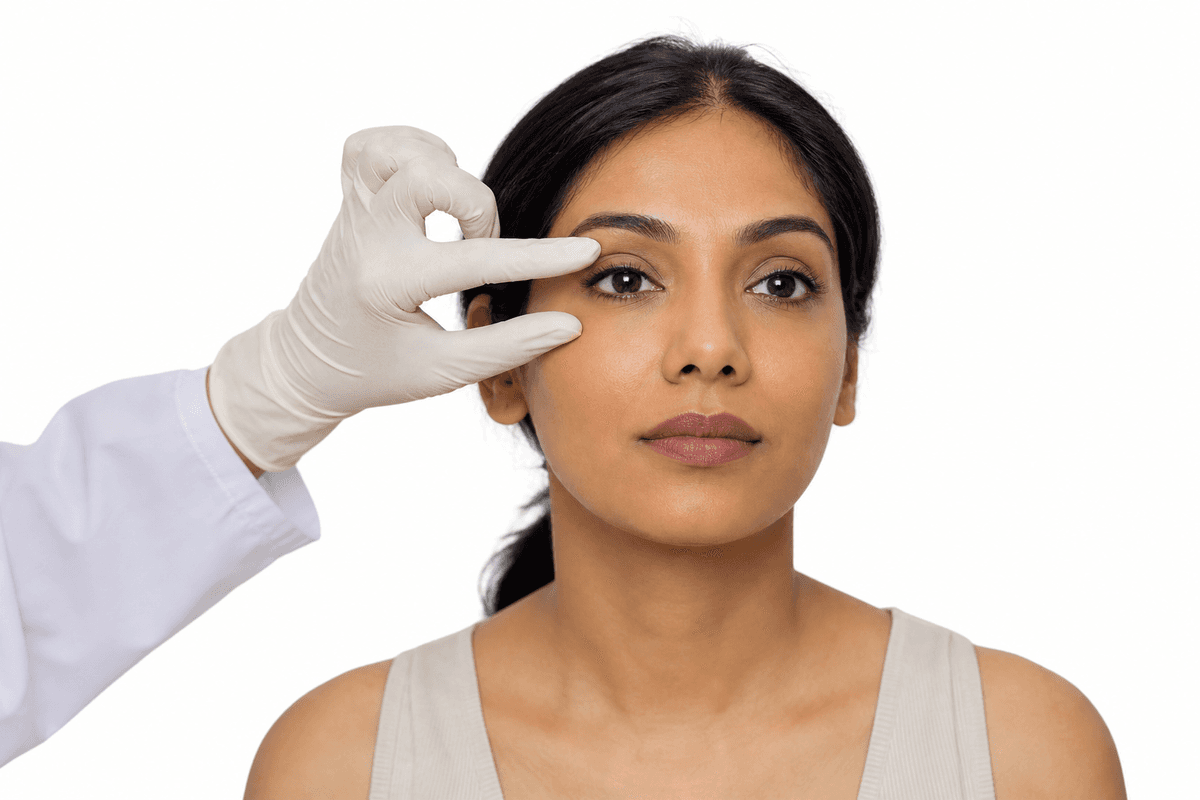
Fat in the eyelids can be removed, repositioned, or left alone, depending on your anatomy. In the upper lid, a small amount of fat from the inner pocket may be removed if it causes bulging, but surgeons are careful not to take too much, because over-removal can make the upper lid look hollow and aged. In the lower lid, the bulging fat pads that form bags can be removed or, more commonly today, repositioned into the hollow groove beneath, which smooths the transition between lid and cheek. The key idea is to restore balance and not to remove everything, since some fat is needed to keep the eyes looking youthful and full.
What Are the Main Techniques at a Glance?
Different problems call for different techniques, and the surgeon chooses the one that suits your eyes. The table below gives a simple overview.
| Concern | Technique | What Happens |
|---|---|---|
| Hooded upper lid | Skin excision | Excess skin is trimmed in the natural crease |
| Puffy upper lid | Fat sculpting | A small amount of fat is removed |
| Under-eye bags | Fat removal or repositioning | Bulging fat is removed or moved to fill the groove |
| Loose lower lid skin | Skin tightening | Excess skin is trimmed or tightened |
| Hollow tear trough | Fat repositioning or volume | Smooths the groove beneath the eye |
This table shows that eyelid surgery is a set of tailored techniques and not a single standard operation. Your surgeon will plan the combination that fits your eyes.
Why Do Surgeons Remove Conservatively?
The skin and fat of the eyelids are very delicate, and removing too much can cause lasting problems. Over-removal of upper lid skin can make it difficult to close the eyes fully, leading to dryness and irritation. Taking too much fat can create a hollow, skeletal look, and pulling the lower lid skin too tightly can cause the lid to sag away from the eye. For these reasons, experienced surgeons take small, careful steps and often prefer to under-correct slightly than to over-correct. When these elements come together, patients are better positioned to achieve results they feel comfortable with over time. Glamorous Aesthetic Clinic is committed to providing that level of personalized care, and every recommendation is based on careful assessment of the individual. If you are considering treatment, begin with a professional consultation and choose a provider who values safety, clarity, and realistic expectations.
What Happens to the Tissue After Surgery?
The removed skin and fat are not replaced, and the remaining tissues settle into their new position over the following weeks. The incisions heal, and the scars begin red or pink, then fade to fine lines in the crease or below the lashes. Swelling and bruising are the body’s normal response to surgery and peak in the first few days. As the swelling resolves, the true contour becomes visible. The tissues continue to mature for several months, and the lids may feel slightly firm or tight at first. Cold compresses, head elevation, and gentle care help the healing process.
Are There Non-Surgical Ways to Treat Skin Looseness?
Not every eyelid concern requires removal of skin or fat. When the changes are mild, treatments that tighten the skin and stimulate collagen can improve smoothness without an operation. An ultrasound skin tightening treatment is one example of a lighter option for gentle lifting. These approaches cannot remove fat or large amounts of loose skin, so their effect is more subtle and shorter lasting than surgery. A good surgeon will explain honestly which method matches the level of change you have. You can also read about how an established practice presents its range of services on the page about the best cosmetic surgery clinic in Islamabad.
FAQs
Is any fat left in the eyelid after surgery?
Yes, surgeons preserve enough fat to keep the eyes looking natural and full.
Can the removed skin or fat come back?
The removed tissue does not return, though ageing can cause new looseness over time.
Will I be able to close my eyes after surgery?
Yes, surgeons plan to preserve normal eye closure, and mild tightness usually improves.
Does the surgery hurt?
It is done under anaesthesia, and recovery involves mild discomfort and tightness.
Final Thought
During eyelid surgery, excess skin is carefully trimmed, and fat is removed or repositioned in small, measured steps to restore a smooth and natural contour. Conservative decisions protect the function and appearance of the eyes. Choose an experienced surgeon, ask how your skin and fat will be handled, and decide only when you feel fully informed and comfortable.
If you would like to understand what would be done for your own eyelids, a professional consultation is the right starting point.
Read more
Contact us at our website: https://www.glamaesthetics.com.pk/