

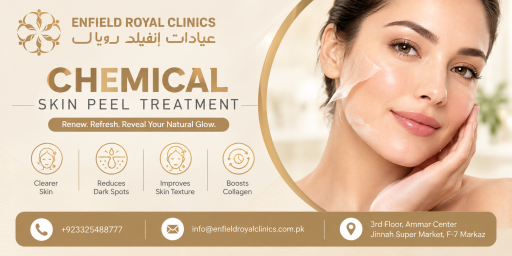
Healthy-looking skin often reflects consistent care, but daily exposure to sunlight, pollution, aging, and environmental stress can affect its appearance. Dead skin cells may accumulate on the surface, while acne, pigmentation, and uneven texture can make the complexion look dull. For individuals seeking professional skincare solutions, chemical peel treatment offers an option to address several common concerns.
Chemical peel treatment in Islamabad is increasingly considered by people who want to improve their skin’s appearance through controlled exfoliation. The procedure uses a specially selected chemical solution to remove specific layers of damaged or dead skin cells. Depending on the formulation and treatment depth, chemical peels may support skin renewal, improve texture, and reduce the appearance of certain pigmentation concerns.
However, the benefits depend on the patient’s skin type, treatment selection, professional technique, and aftercare. Understanding these factors helps individuals develop realistic expectations and make informed skincare decisions.
1. How Does Chemical Peel Treatment Improve Skin Texture?
One of the main benefits of chemical peel treatment is its ability to improve the appearance of uneven skin texture. Dead skin cells, sun damage, acne-related changes, and natural aging can contribute to roughness and an irregular surface.
Chemical peels use ingredients such as alpha hydroxy acids (AHAs), beta hydroxy acids (BHAs), or other peeling agents to exfoliate the skin. These ingredients work differently depending on their concentration, formulation, and application.
Superficial peels generally target the outermost layers of the skin and may help improve mild surface roughness. Deeper peels affect more layers and require careful professional assessment because they can involve increased recovery time and risks.
As the treated skin recovers, patients may notice a smoother and more refined appearance. The extent of improvement varies, and chemical peels cannot guarantee complete correction of deep scars or significant skin irregularities.
For people considering Chemical peel treatment in Islamabad, an assessment can help determine which type of peel is appropriate for their skin concerns.
2. What Benefits Can Chemical Peel Treatment Offer for Skin Tone?
Uneven skin tone is a common concern among individuals who experience sun exposure, acne-related pigmentation, or other changes in skin color. Chemical peels may help improve selected pigmentation concerns by exfoliating affected skin layers and supporting skin renewal.
The treatment may be considered for:
- Certain types of sun-related pigmentation
- Uneven skin tone
- Selected superficial dark spots
- Some acne-related discoloration
However, pigmentation has different causes, and not every type responds in the same way. Melasma, for example, can be influenced by hormonal changes, sunlight, and inflammation. Irritating or unsuitable treatments may worsen pigmentation in some individuals.
A qualified professional should identify the likely cause of pigmentation before recommending a peel. For patients with darker skin tones, careful treatment selection is particularly important because post-inflammatory hyperpigmentation can develop after skin irritation or injury.
Chemical peels may support a more even-looking complexion, but consistent sun protection and appropriate skincare remain important for maintaining results.
3. How Can Chemical Peel Treatment Support Brighter Skin?
A dull complexion can result from accumulated dead skin cells, dehydration, environmental exposure, and changes associated with aging. Although skin naturally renews itself, some people seek exfoliation treatments to improve its surface appearance.
Chemical peel treatment can help remove selected layers of dead or damaged skin cells, allowing fresher-looking skin to become visible as the treated area recovers.
The resulting benefits may include:
- A more refreshed complexion
- Improved surface smoothness
- A brighter-looking skin appearance
- Better-looking skin texture
The brightness achieved through a peel is not the same as permanently changing a person’s natural skin color. Instead, the treatment focuses on improving the appearance of the skin and addressing selected surface concerns.
Results depend on the peel’s ingredients, strength, treatment frequency, and individual response. Some patients may notice changes after one session, while others may require a professionally planned series of treatments.
A suitable skincare routine, including moisturizer and sunscreen, can help support the skin during and after recovery.
4. Is Chemical Peel Treatment Helpful for Acne and Acne Marks?
Acne is a common skin concern that can affect people of different ages. It may leave behind inflammation, uneven texture, and dark marks that remain after breakouts have healed.
Some chemical peels, particularly those containing salicylic acid, may be used as part of a treatment plan for selected acne-related concerns. Salicylic acid is a beta hydroxy acid that can help exfoliate the skin and support the management of clogged pores.
Certain peels may also help improve the appearance of superficial acne marks. However, acne scars vary considerably. Deep or depressed scars generally require different treatment approaches, and a chemical peel may not provide sufficient improvement on its own.
Before treatment, the professional should assess whether the patient has active acne, irritation, open skin lesions, or a history of pigmentation changes.
Chemical peels should not be viewed as a universal acne solution. Their suitability depends on the patient’s skin condition and the specific formulation being considered.
5. How Does Chemical Peel Treatment Improve the Appearance of Fine Lines?
Fine lines may develop as the skin ages due to changes in collagen, sun exposure, and repeated facial movements. Surface dryness and sun damage can also make fine lines more noticeable.
Certain chemical peels may improve the appearance of superficial fine lines by exfoliating the outer skin layers and supporting a smoother-looking surface.
The potential results depend on the peel’s depth and the condition being treated. Superficial peels may provide modest improvements, while medium-depth peels can produce more significant effects but involve greater recovery requirements.
Chemical peels are not designed to eliminate every wrinkle or reverse the aging process. Patients with deeper wrinkles may need to explore other options after a professional assessment.
Sun protection is particularly important because ultraviolet exposure contributes to premature skin aging. Daily sunscreen use can help protect the skin and support long-term skincare goals.
6. What Makes Professional Chemical Peel Treatment Important?
Although chemical peels are widely used in skincare, the treatment requires appropriate product selection and application. Using an unsuitable peel or applying a strong chemical solution without proper guidance can lead to burns, prolonged irritation, pigmentation changes, or scarring.
Professional treatment planning typically considers:
Skin type: Skin sensitivity and pigmentation risk can influence the choice of peel.
Treatment goals: A peel intended for mild dullness may differ from one selected for pigmentation or acne-related concerns.
Medical and skincare history: Existing skin conditions, medications, and recent cosmetic procedures may affect treatment suitability.
Peel strength: The concentration and depth of the treatment should be selected carefully.
Recovery needs: Patients should understand potential redness, peeling, sensitivity, and downtime before treatment.
Professional assessment does not eliminate all risks, but it helps support safer treatment decisions. Individuals should share relevant medical information and ask about possible side effects before beginning a procedure.
7. How Can Aftercare Support Chemical Peel Results?
Aftercare is an essential part of chemical peel treatment. The skin may become more sensitive following exfoliation, and improper care can interfere with recovery.
Patients should follow the specific instructions provided by their skincare professional. Common recommendations may include:
- Applying broad-spectrum sunscreen regularly
- Using gentle cleansers
- Keeping the skin moisturized
- Avoiding unnecessary sun exposure
- Refraining from picking or peeling the skin
- Avoiding irritating skincare ingredients until advised
Retinoids, strong exfoliants, and certain active skincare products may need to be temporarily paused, depending on the treatment and professional guidance.
Patients should not assume that stronger peeling or increased discomfort means better results. Excessive irritation can damage the skin and increase the risk of complications.
If severe pain, blistering, significant swelling, or unusual pigmentation develops, medical advice should be sought promptly.
Why Consider Chemical Peel Treatment in Islamabad?
People searching for Chemical peel treatment in Islamabad may be interested in improving skin texture, pigmentation, acne-related concerns, or overall complexion. The treatment can be considered as part of an individualized skincare plan, but suitability should always be determined through professional assessment.
A consultation provides an opportunity to discuss skin concerns, understand available peel types, and learn about expected results and recovery. Patients can also ask about potential side effects and the aftercare routine required for their selected treatment.
Choosing a procedure based on realistic expectations is important. Chemical peels can offer cosmetic benefits, but outcomes differ between individuals. Skin condition, professional technique, treatment formulation, and ongoing skincare all influence the results.
Frequently Asked Questions
1. What is the main benefit of chemical peel treatment?
The main benefit is controlled exfoliation, which can improve the appearance of skin texture, dullness, and selected pigmentation concerns. Results depend on the peel type and individual skin response.
2. Can chemical peel treatment improve dark spots?
Certain chemical peels may help reduce the appearance of selected dark spots. However, treatment suitability depends on the cause of pigmentation and the patient’s skin characteristics.
3. How many chemical peel sessions are needed?
The number of sessions varies according to the treatment type, skin concerns, and desired results. A professional can recommend an appropriate schedule after assessing the skin.
4. Is chemical peel treatment suitable for sensitive skin?
Some individuals with sensitive skin may be suitable for carefully selected treatments, while others may face increased irritation. A professional assessment is important before proceeding.
5. Can chemical peels remove acne scars completely?
Chemical peels may improve certain superficial acne marks and texture concerns. Deep acne scars often require different treatments, and complete removal cannot be guaranteed.
6. What should patients do after chemical peel treatment?
Patients should protect their skin from sunlight, follow gentle skincare practices, and avoid picking peeling skin. Specific aftercare instructions depend on the peel performed.
Conclusion
Chemical peel treatment offers several potential benefits, including improved skin texture, a brighter-looking complexion, and support for selected pigmentation and acne-related concerns. Its effectiveness depends on appropriate treatment selection, professional assessment, and consistent aftercare.
For individuals exploring Chemical peel treatment in Islamabad, understanding the procedure and its potential benefits can help them make informed skincare decisions. With realistic expectations and suitable professional guidance, chemical peels may contribute to smoother, refreshed, and healthier-looking skin.
- Комментарии